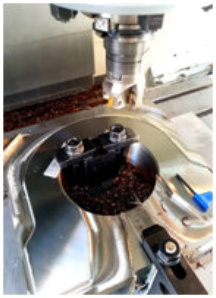
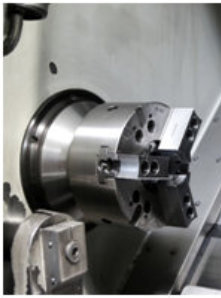
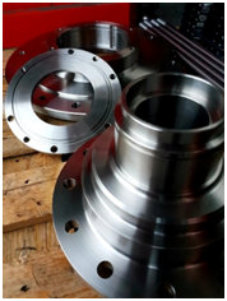
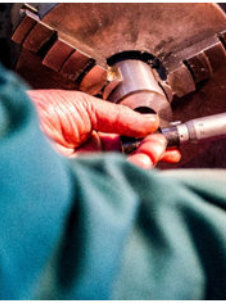
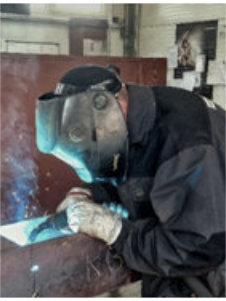
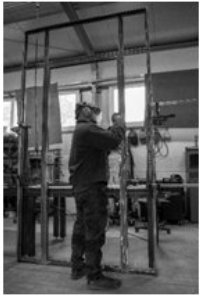
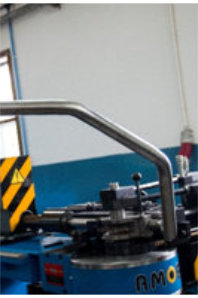
Apprentices training in this profession learn to operate and supervise the work of universal, semi-automatic, and automatic machine tools, such as: lathes, milling machines, grinders, including numerically controlled (computer/CNC) machines, used for shaping metal and plastic objects.
Professional activities include:
preparing the workstation (familiarizing themselves with technical drawings or patterns, preparing tools for work),
setting parameters and supervising machine tool operation,
operating milling machines, lathes, and other computer-controlled machine tools,
programming machine tools,
creating and reading technical drawings,
determining corrections for individual tools mounted in the tool head, depending on the machining allowance and other factors affecting machining accuracy,
cleaning and maintaining operated machines, equipment, and instruments.
CAREER PROSPECTS FOR GRADUATES
The machinery industry is a developing sector of the economy in our country, which guarantees employment aligned with the field of study after graduation. The job market expects professional employees with high vocational qualifications. Due to their production and service functions, graduates of this profession find employment primarily in metal and machinery industry enterprises, maintenance and repair companies, as well as in other sectors of the economy involved in manufacturing.
METALWORKER
A metalworker is a craft profession involving manual or machine-assisted metal processing. A person engaged in metalworking can create both simple and more complex metal structures. They also specialize in repairing damaged mechanisms and metal products.
Professional activities include:
Preparing the workstation (familiarizing themselves with technical drawings or patterns, preparing tools for work),
Layout and marking of components before machining
Cutting and sizing material
CAREER PROSPECTS FOR GRADUATES
The machinery industry is a developing sector of the economy in our country, which guarantees employment aligned with the field of study after graduation. The job market expects professional employees with high vocational qualifications. Due to their production and service functions, graduates of this profession find employment primarily in metal and machinery industry enterprises, maintenance and repair companies, as well as in other sectors of the economy involved in manufacturing.
Why Choose Us?
Why train with PRYMET?
For nearly 30 years, we have been providing metalworking services, representing the best craft traditions.
For 25 years, we have been training apprentices in the profession of “Machining Operator.” From 2025, we will begin training in the profession of “Metalworker.”
We are a small company handling small-batch orders. This means that every team member must be multidisciplinary. For an apprentice, this translates to a broad understanding of the profession and the opportunity to acquire many essential skills.
Apprentices learn the profession by working with high-quality modern tools.
Apprentices have the opportunity to learn the specifics of working on both conventional machines and modern machining centers under the guidance of specialists.
Please contact our office for further information.